
 Read on Twitter
ED 3 AM:  ambulance rushes in, pt in his 40's unconscious, BP 50/20, HR 140. Reanimation is started and arterial gases are ordered: lactate 10! Two hours later, pt conscious, MAP >65, HR 100, new arterial gases are ordered: lactate 9.
Was reanimation unsuccesful?
Poll & :
:
ambulance rushes in, pt in his 40's unconscious, BP 50/20, HR 140. Reanimation is started and arterial gases are ordered: lactate 10! Two hours later, pt conscious, MAP >65, HR 100, new arterial gases are ordered: lactate 9. Was reanimation unsuccesful?
Poll &
:
First, let's go #BackToBasics w/ lactate:
 2 enantiomers: L & D
Formed from pyruvate by LDH (usual ratio 10:1)
PKa 3.8 (lactate predominant over lactic acid)
Can be used for ATP formation or gluconeogenesis (lac pyruvateA-CoA or lacpyruvateoxaloacetate)
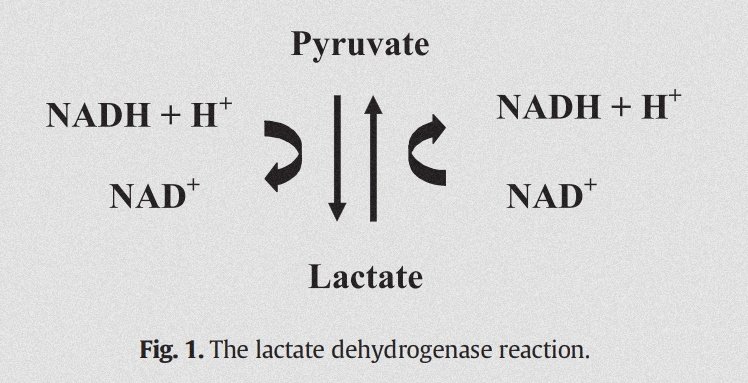
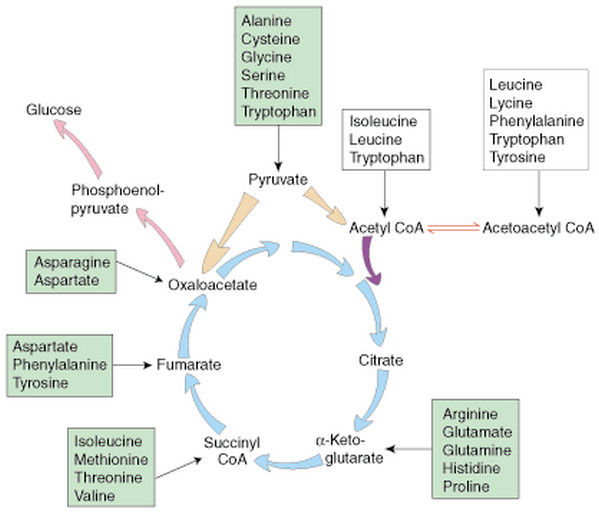
2 enantiomers: L & D Formed from pyruvate by LDH (usual ratio 10:1) PKa 3.8 (lactate predominant over lactic acid) Can be used for ATP formation or gluconeogenesis (lacpyruvateA-CoA or lacpyruvateoxaloacetate)
We tipically associate w/ O2, but what else can
  ? Many things!:
Sepsis
Cyanide
CO
 : MET, linezolid, paracetamol, NRTI's
thiamine
 : Propylene glycol, methanol, ethanol
Malignancy
Cirrhosis
Severe asthma
 surgery
w/ O2, but what else can ? Many things!: Sepsis Cyanide CO : MET, linezolid, paracetamol, NRTI's thiamine : Propylene glycol, methanol, ethanol Malignancy Cirrhosis Severe asthma surgery
So lactate ≠ O2: so far, so good. But it surely does in shock states, right?
O2: so far, so good. But it surely does in shock states, right?
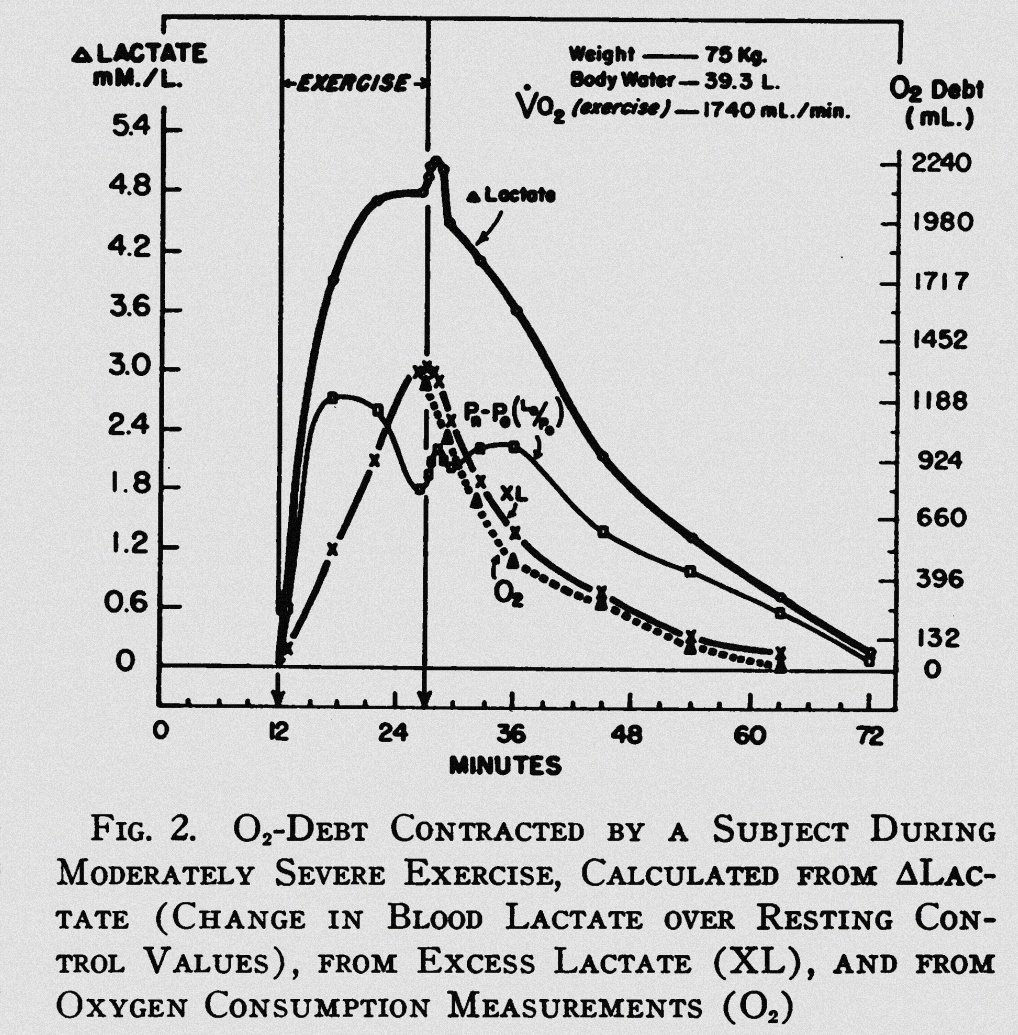
Back in 1958, Huckabee observed the relationship between "oxygen debt" and "excess lactate", plotting almost superposable curves from the relationship of them.
Then in 1970, Weil further supported this data w/ a hemorrhagic shock model in which again correlated w/ O2 debt
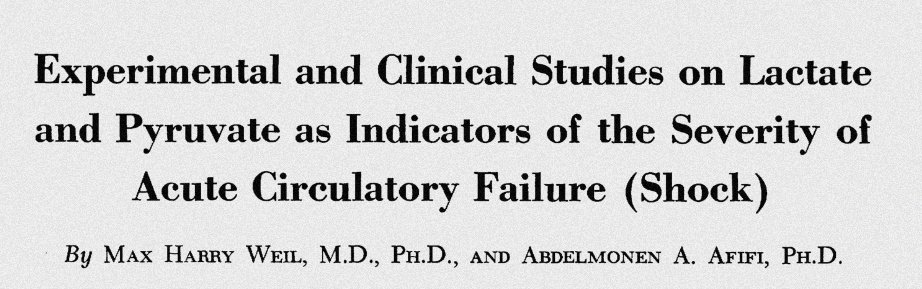
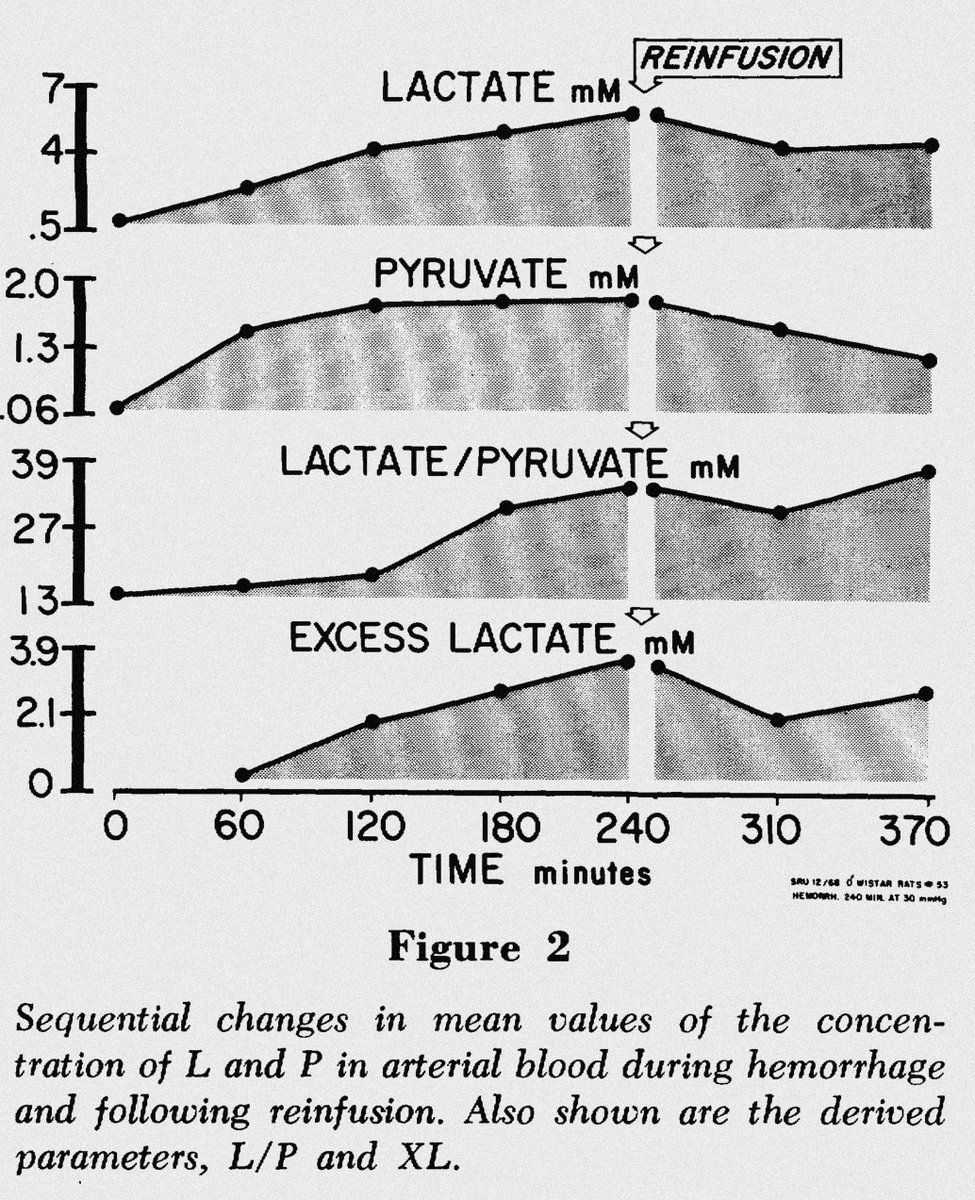
Then in 1970, Weil further supported this data w/ a
hemorrhagic shock model in which again correlated w/ O2 debt
Furthermore, the classic division of type A and B , assumes the former is always 2/2 a DO2/VO2 mismatch anaerobic glycolysis, and is the cause of in the critically ill pt, whilst the latter represents w/o anaerobic glycolysis.
But... Is it always true?
, assumes the former is always 2/2 a DO2/VO2 mismatch anaerobic glycolysis, and is the cause of in the critically ill pt, whilst the latter represents w/o anaerobic glycolysis.But... Is it always true?
Not quite. In 1994, Boekstegers et al. measured skeletal muscle pO2 in three groups:
 Sepsis
Limited infection
shock
They found pO2 to be in sepsis compared to the other 2 groups, being in more severe sepsis states!
But what about cellular dysoxia, you might ask?
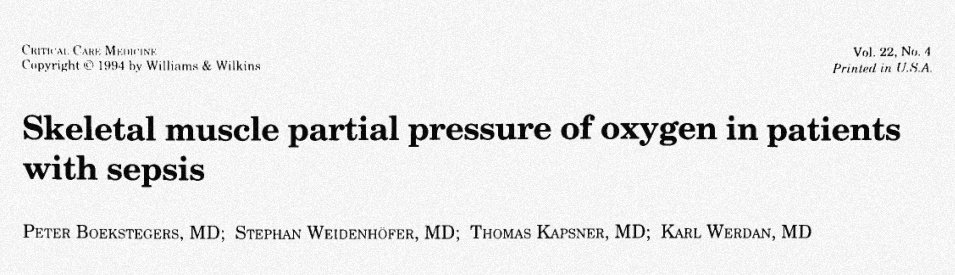
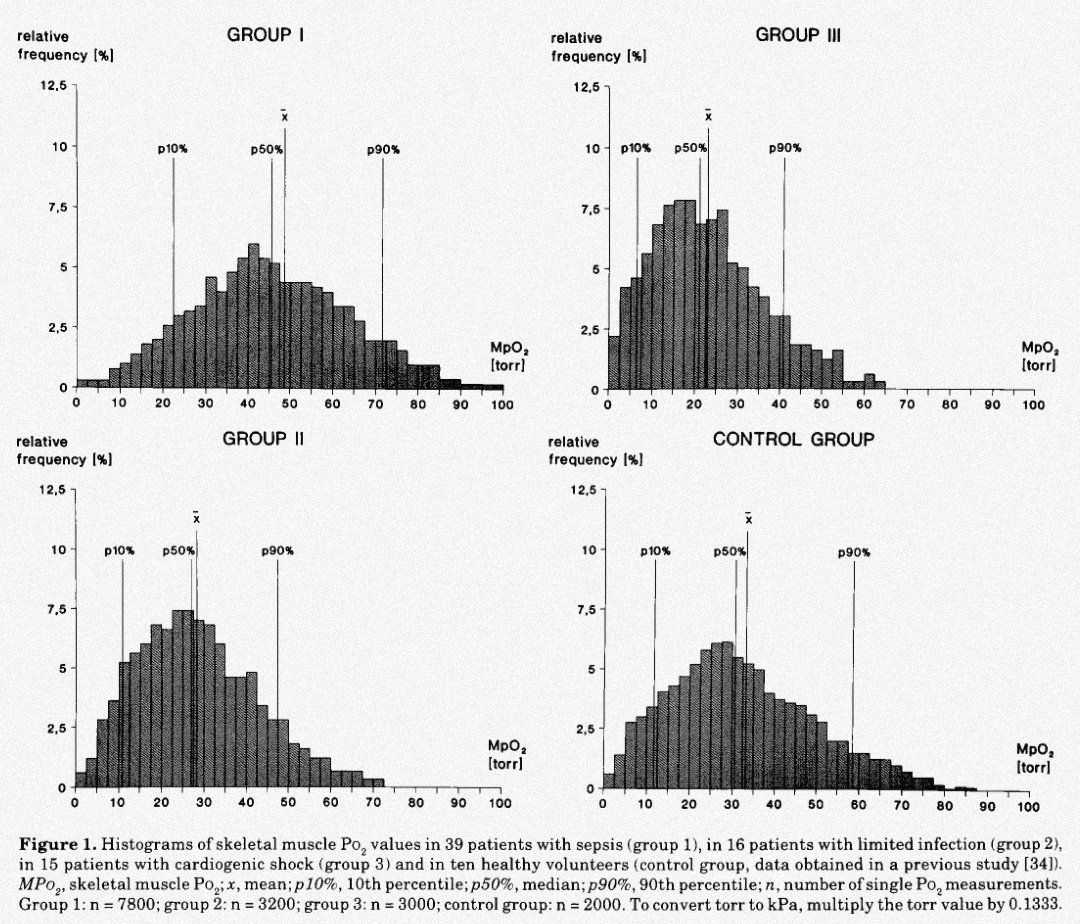
Sepsis Limited infection shockThey found pO2 to be
in sepsis compared to the other 2 groups, being in more severe sepsis states!But what about cellular dysoxia, you might ask?
Well, some people asked themselves that same question before! In 1992, Hotchkiss et al. injected fluoromisonidazole (binds covalently to cells in inv proportion to cell O2 tension) in septic and sham operated , finding no diff in it's concentration in various tissues (but  )
)
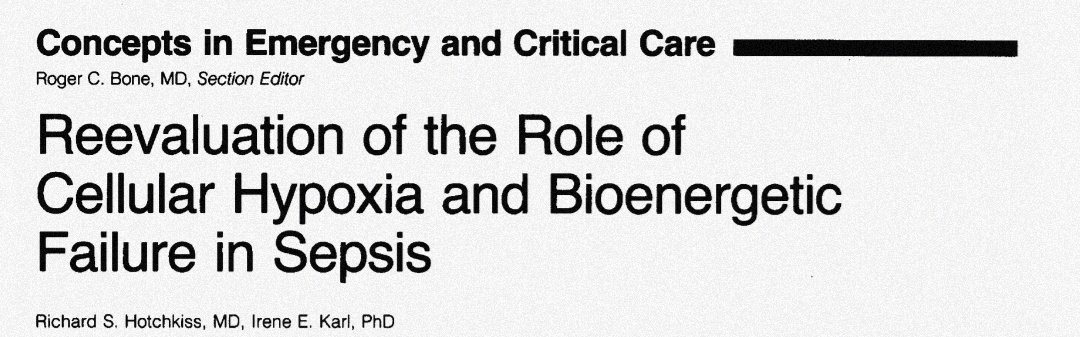
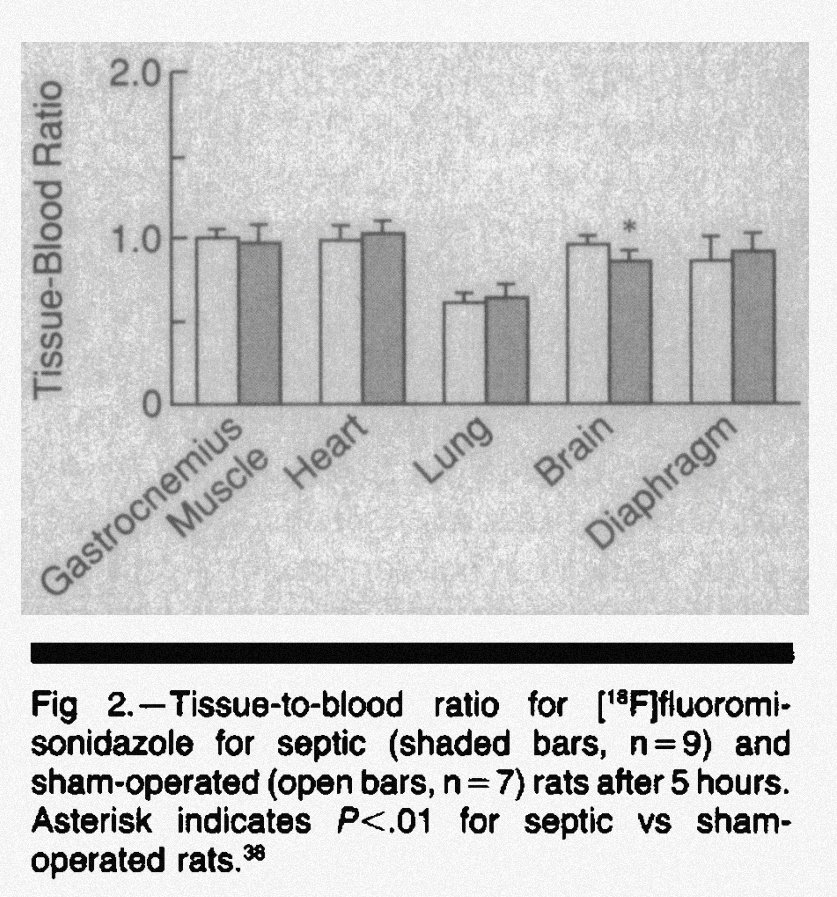
, finding no diff in it's concentration in various tissues (but )
Furthermore, in 2012 Regueira et al. used 32  w/
w/  peritonitis, tamponade or hypoxemic hypoxia, demonstrating no increase in HIF-1α (hypoxia-inducible factor 1 alpha) in septic animals despite a 2x in lactate levels!
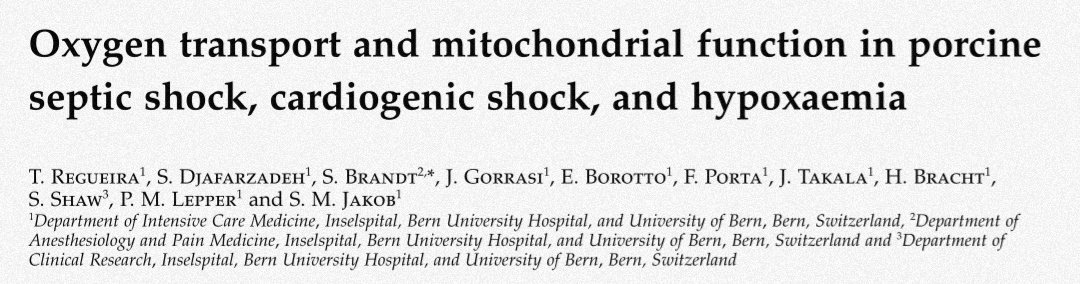
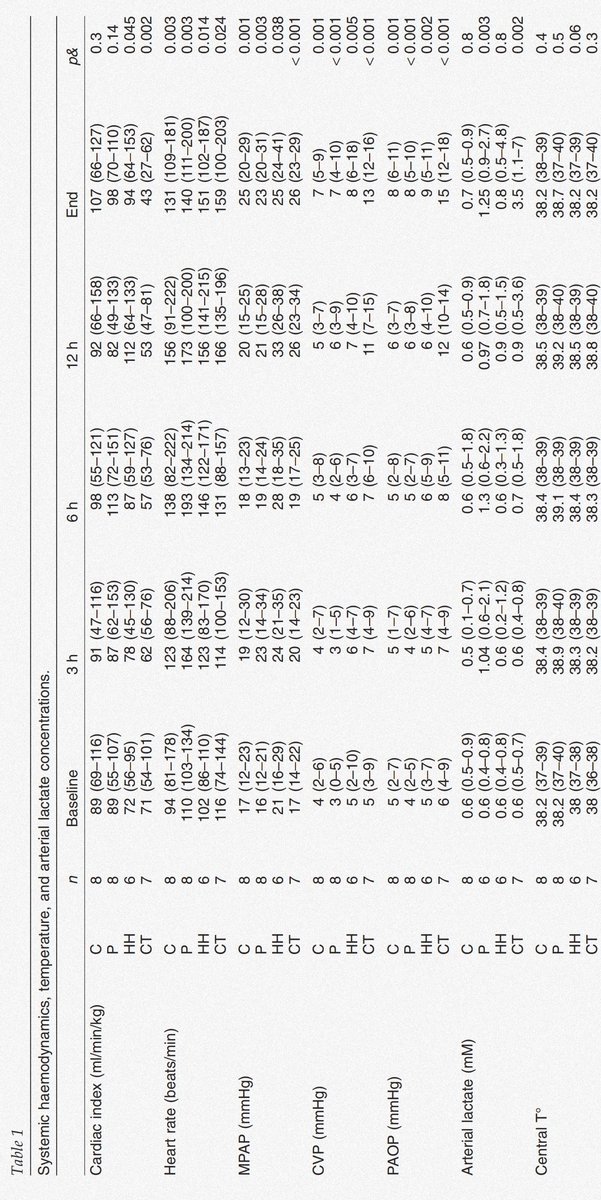
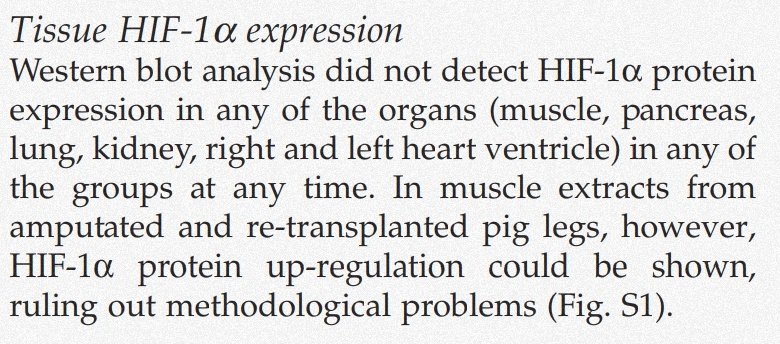
w/ peritonitis, tamponade or hypoxemic hypoxia, demonstrating no increase in HIF-1α (hypoxia-inducible factor 1 alpha) in septic animals despite a 2x in lactate levels!
Another theory in sepsis states for is a DO2/VO2 mismatch; this was studied in 9 septic critically ill pts by Ronco et al. back in 1993 and... found sepsis didn't modify critical O2 delivery threshold for anaerobic metabolism compared to controls!
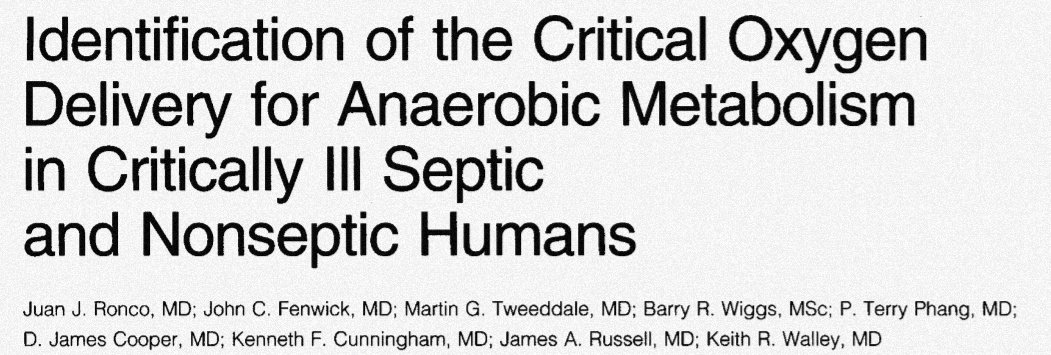
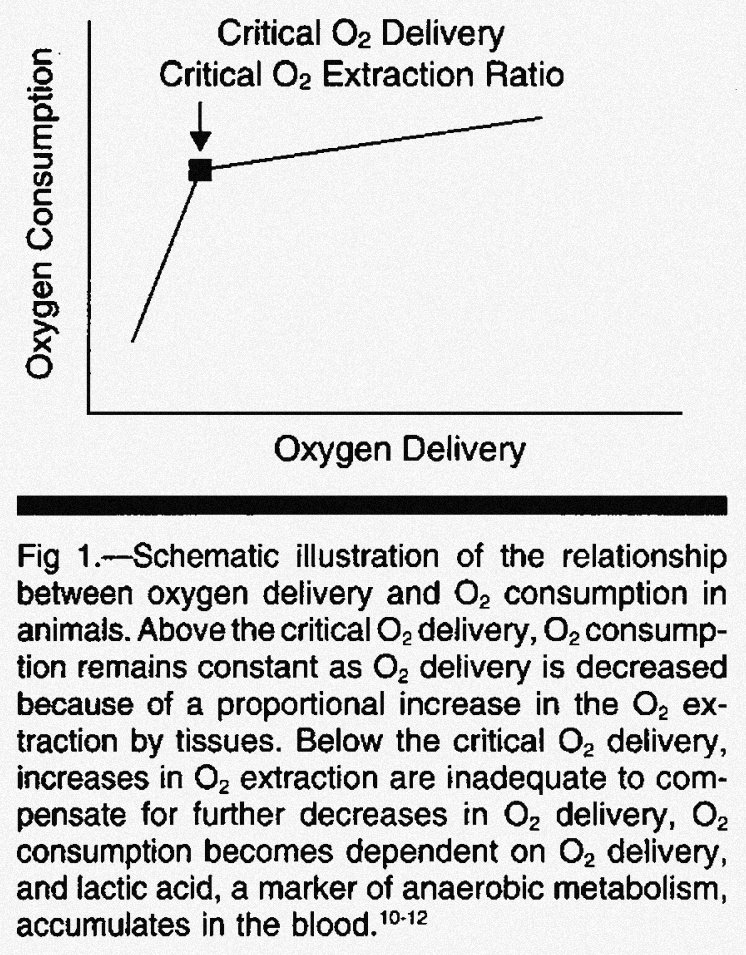
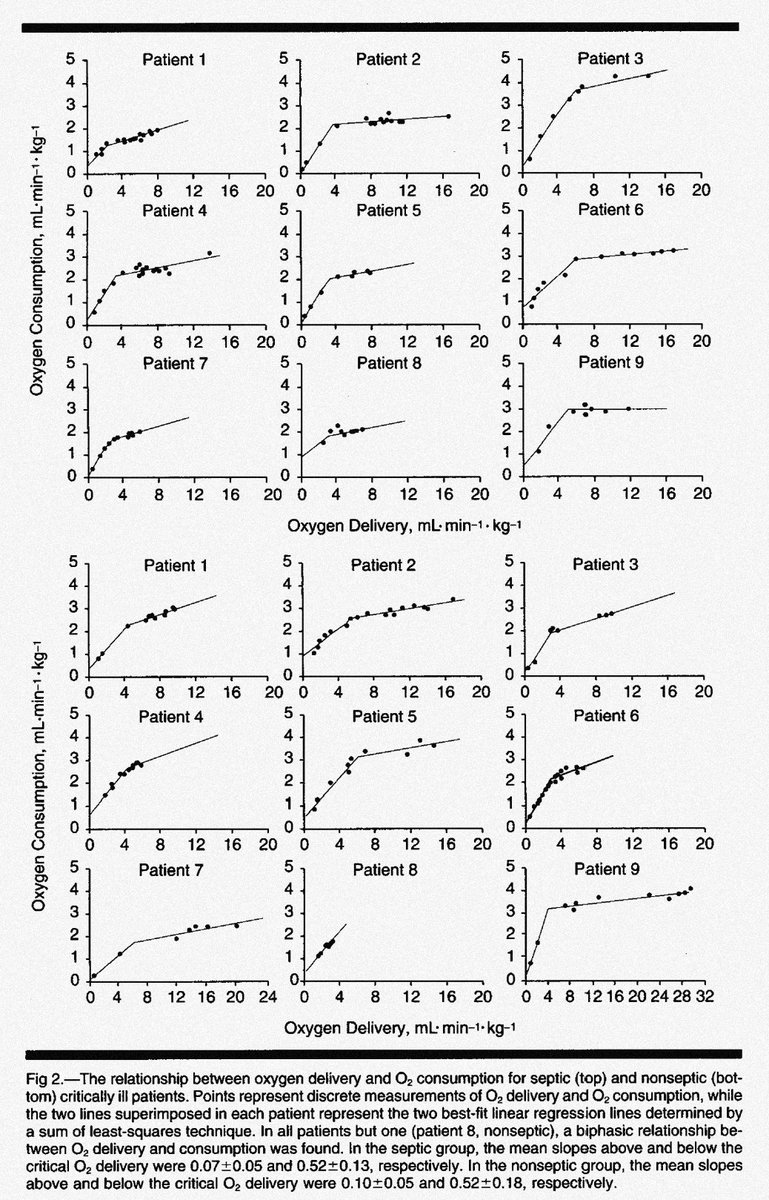
is a DO2/VO2 mismatch; this was studied in 9 septic critically ill pts by Ronco et al. back in 1993 and... found sepsis didn't modify critical O2 delivery threshold for anaerobic metabolism compared to controls!
Furthermore, in 1994 Hayes et al. tried to achieve the following goals w/volume :
CI > 4.5 L/min/m²
DO2 >600 mL/min/m²
VO2 > 170 mL/min/m²
If achieved, randomized to dobutamine vs standard care. The results:
 = MAP & VO2

 in intervention group!
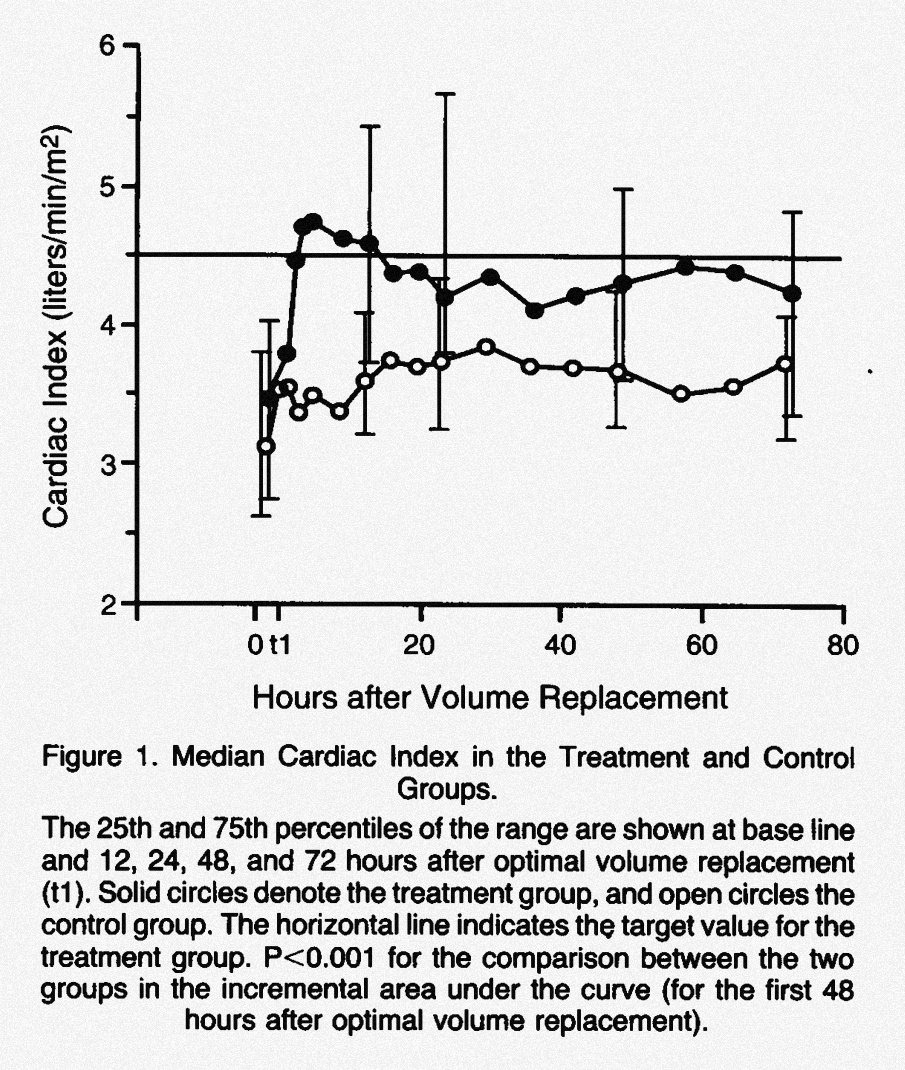
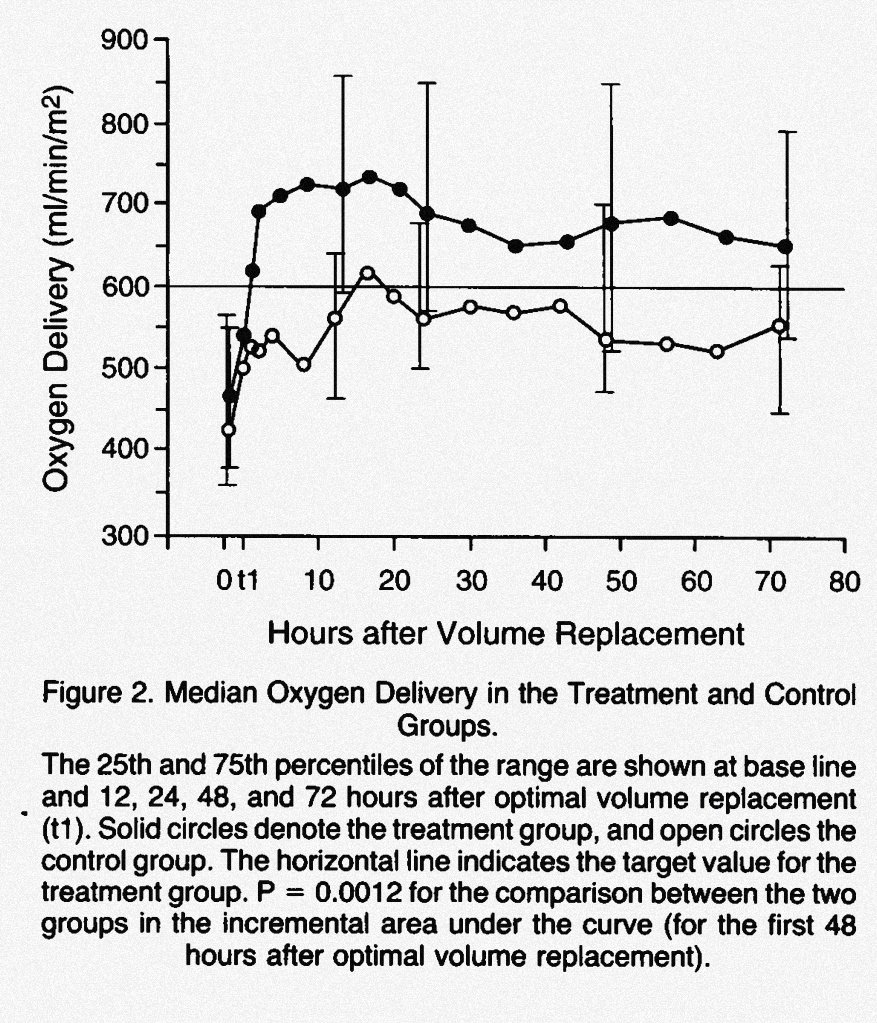
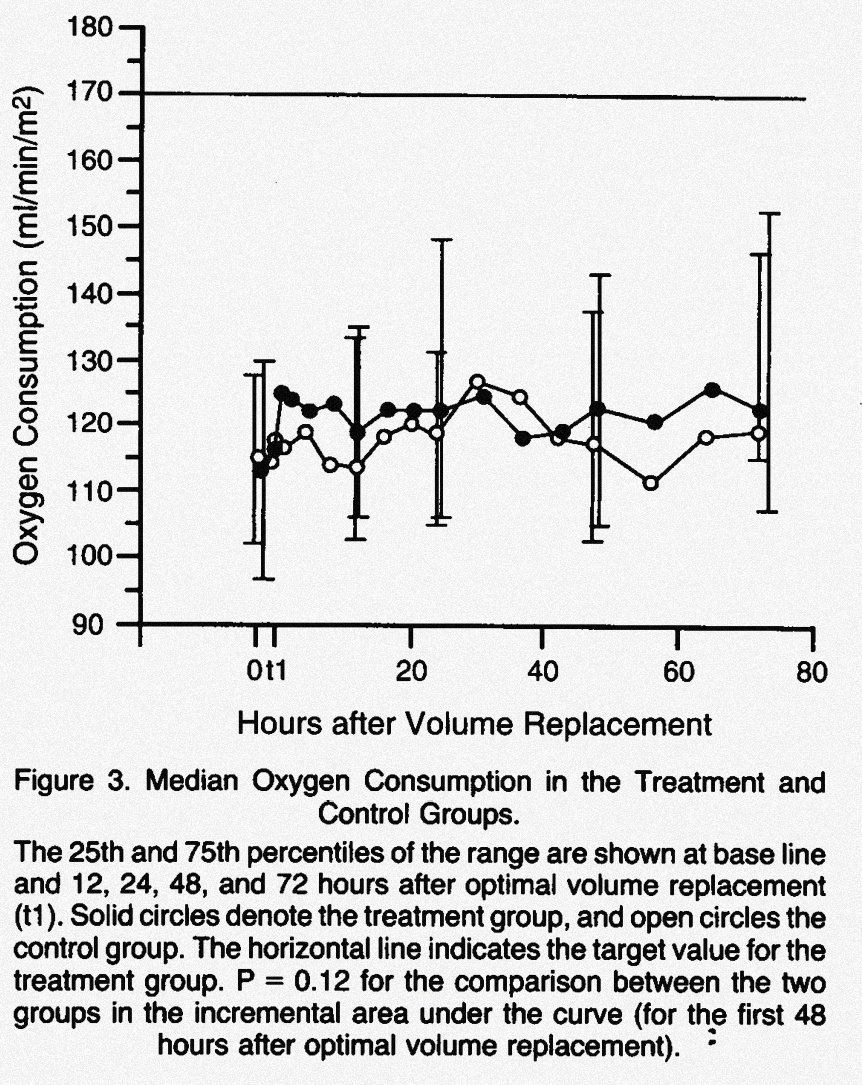
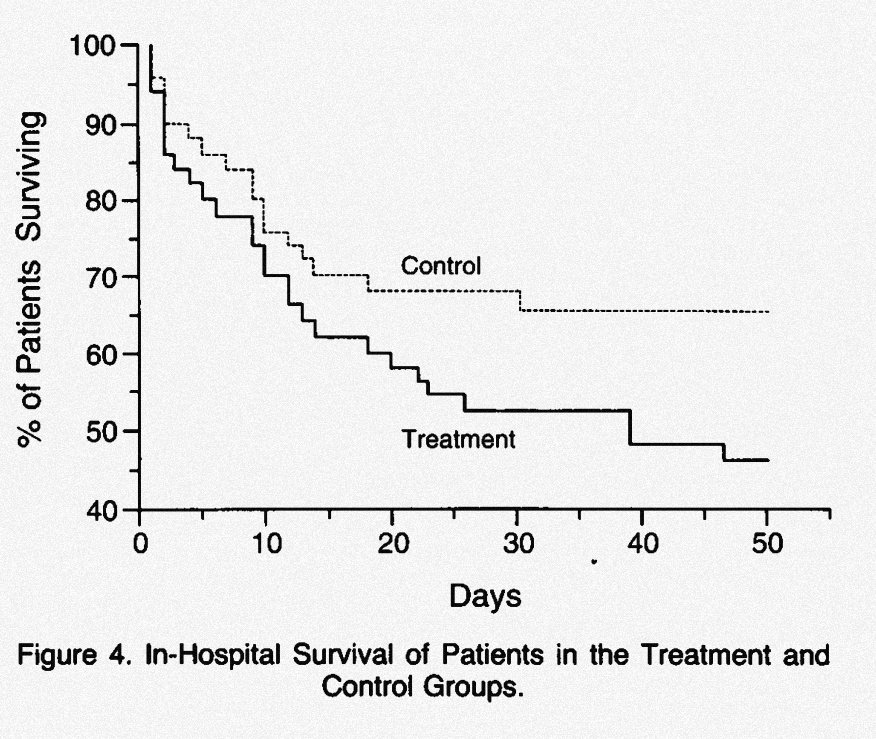
: CI > 4.5 L/min/m² DO2 >600 mL/min/m² VO2 > 170 mL/min/m²If
achieved, randomized to dobutamine vs standard care. The results: = MAP & VO2 in intervention group!
Ok, so where does lactate come from in sepsis?!
Well, here's an alt theory! aerobic glycolisis 2/2 adrenergic state:
CHO metabolism exceeds mitochondria oxidative capacity piruvate produced at rates than PDH can convert to ACoA piruvate lac by mass effect
Well, here's an alt theory!
aerobic glycolisis 2/2 adrenergic state: CHO metabolism exceeds mitochondria oxidative capacity piruvate produced at rates than PDH can convert to ACoA piruvate lac by mass effect
What supports this theory?:
Septic pts whole  mRNA analyisis: GLUT-1, LDH, PKM-2, hexokinase-3, MCT-4
Isotope dilution methods: Lac and glc turnover in
Lac kinetics: normal removal (pb source: production)
Cathecolamines β2 rec Na/K ATPase act
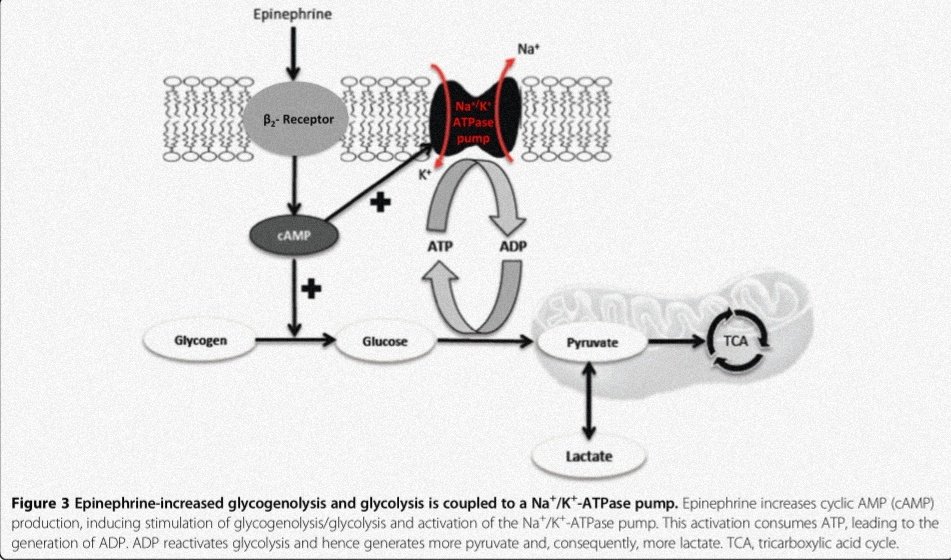
Septic pts whole mRNA analyisis: GLUT-1, LDH, PKM-2, hexokinase-3, MCT-4 Isotope dilution methods: Lac and glc turnover in Lac kinetics: normal removal (pb source: production) Cathecolamines β2 rec Na/K ATPase act
But do all organs produce lactate during sepsis? No! Some production, but some uptake!
The organs that mainly lactate in exp models are  the lung and
  the muscle. And uptakers?:
Gut
Kidney
So, as García-Álvarez et al. fairly put it:
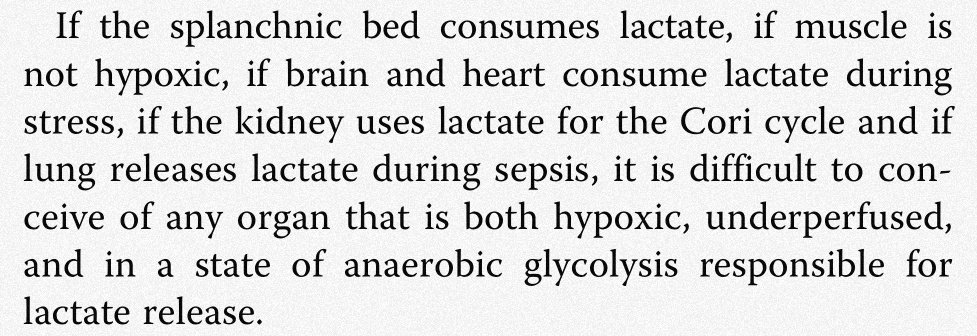
production, but some uptake! The organs that mainly
lactate in exp models are the lung and the muscle. And uptakers?: Gut KidneySo, as García-Álvarez et al. fairly put it:
Furthermore, studies using labeled exogenous lactate in septic px have shown that 50-60% goes to oxidation by cells, whilst the remaining 30-40% is used as substrate for glycogen synthesis, acting under stress as both:
 Alt fuel to glucose
A source for glucose itself
Alt fuel to glucose A source for glucose itself
From all we've reviewed, we can see why the "lactate clearance" approach in sepsis seems to be a goal not to be pursued. We can't know if its "clearance" is 2/2 production, uptake, dilution by  or a combination of the three!
Besides, it's levels ≠ or
or  reanimation.
production, uptake, dilution by or a combination of the three!Besides, it's levels ≠
or reanimation.
Time to wrap up:
Lactate can be by A LOT of causes
O2 doesn't seem to be lac origin in sepsis
Adrenergic (both endo and exogenous) seems to account for most of lactate in
uptake by organs in seems to be an energy adaptive mechanism
Lactate can be by A LOT of causes O2 doesn't seem to be lac origin in sepsis Adrenergic (both endo and exogenous) seems to account for most of lactate in uptake by organs in seems to be an energy adaptive mechanism
Hope you guys got here and enjoy reading the as much as I enjoyed doing it! Sources (PMID):
5482913
8143474
1538541
8411504
7993413
13513756
22571590
22517402
25394679
24929216
as much as I enjoyed doing it! Sources (PMID):5482913
8143474
1538541
8411504
7993413
13513756
22571590
22517402
25394679
24929216
@sargsyanz @WrayCharles @AvrahamCooperMD @IM_Crit_ @medpedshosp @DoctorWatto @AllisonRBond @tony_breu @MedTweetorials @ArgaizR @COREIMpodcast @tumleal @msiuba @ThinkingCC
@iceman_ex @PulmCrit @Thind888 @curromir @load_dependent @Manoj_Wickram @ArgaizR @ogi_gajic @daniel_opazo @RaulChF @BrooksWalsh @AndreMansoor @MDVictorJimenez @EricTopol


