
 Read on Twitter
The 2020 ACC / AHA valve guidelines are out imminently
I'm sure some parts will generate a lot of debate, but a useful tip is to read all the explanatory text & not just review the figures! The justification for certain decisions is often to be found there...
I'm sure some parts will generate a lot of debate, but a useful tip is to read all the explanatory text & not just review the figures! The justification for certain decisions is often to be found there...
I have not yet read the whole document, but aortic stenosis inevitably catches the eye...in particular the decision for both TAVI & sAVR to have a Class I indication in the age range 65-80...
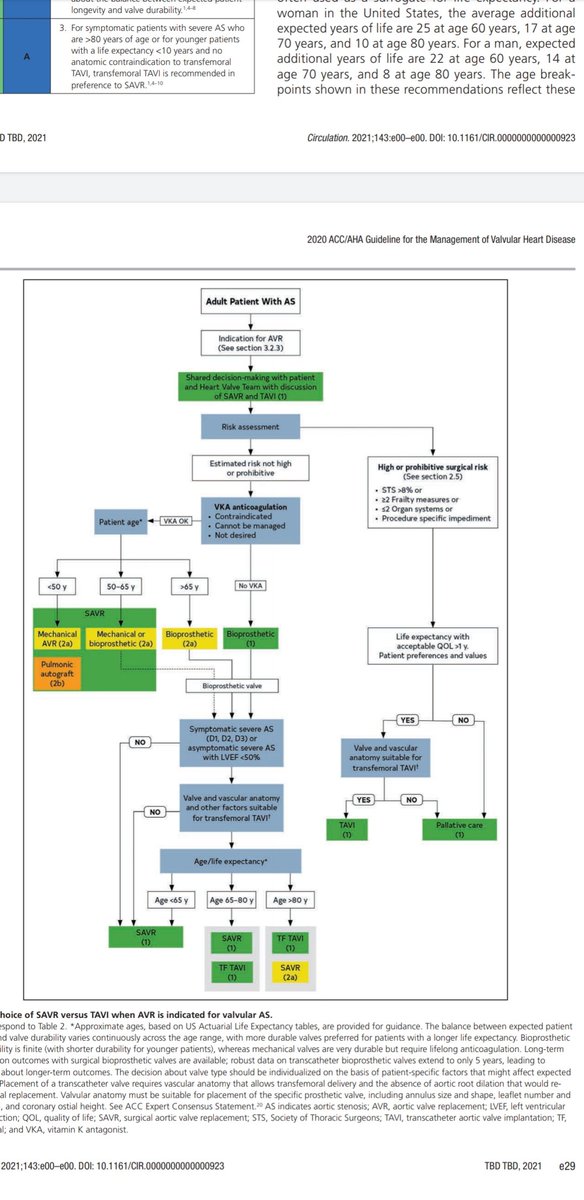
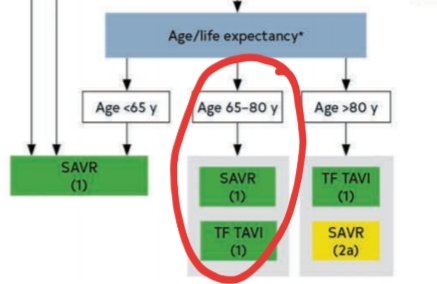
In the low-risk TAVI trials presented last year, mean age was 73-74yrs (+/-6yrs). So, closer to 75 than to 70. I'm sure there must be good reasons why Guideline Committee went for 65, but I can't find it in the text & don't understand it. Surely should have been 70, if not 75?
Interestingly, and helpfully, they provide the expected extra years of life for men & women in  - they're quite long! 17 years for a 70yr old...
This must be taken into account when deciding prostheses...
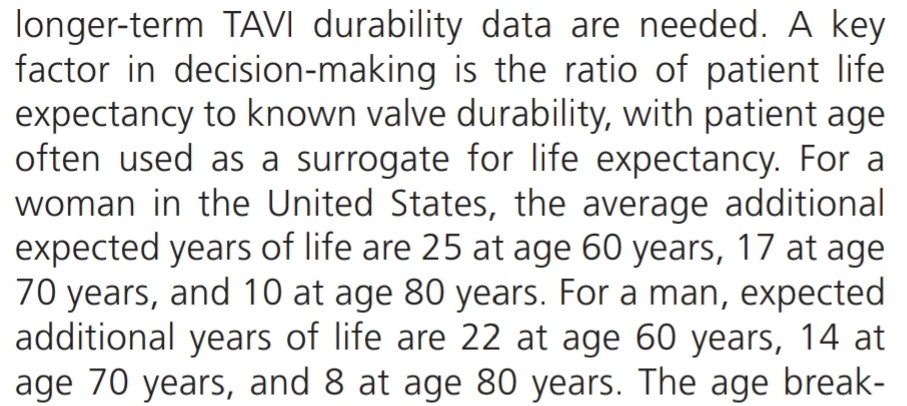
- they're quite long! 17 years for a 70yr old...This must be taken into account when deciding prostheses...
What is surprising is that the committee acknowledge that we don't yet have outcome data >5yrs for the latest TAVI valves...yet it has a Class I recommendation in people in their late 60s? I find that difficult to follow...
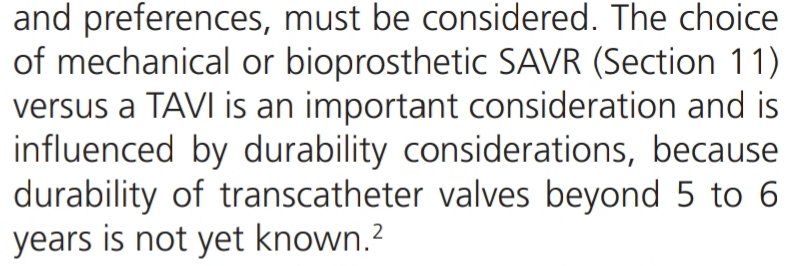
I think we all expected changes after last year's trial results, even though 2yr data slightly less rosy than 1yr. I think this would have been reasonable if the cut-off was <75 (or at least 70) for sAVR?
What does everyone else think? Anyone know why it's 65-80?
#cardiotwitter
What does everyone else think? Anyone know why it's 65-80?
#cardiotwitter


