
 Read on Twitter
My attempt on "Decoding the HLA" with tweetorial & some slides/VisualArts @kidney_boy @NSMCInternship @Nephro_Sparks @hswapnil @rheault_m @RenalFellowNtwk @ssfarouk #Transplant
1/
1/
 MHC complex
 cluster of genes--> encodes HLA moleculeslocated on chromosome 6p21over 200 genes; of which 40% involved in immune response
2/
HLA Genes:main function is immune regulationmajor barrier to transplantgene products are histocompatibility moleculeshighly polymorphicsignificant linkage disequilibrium 
3/
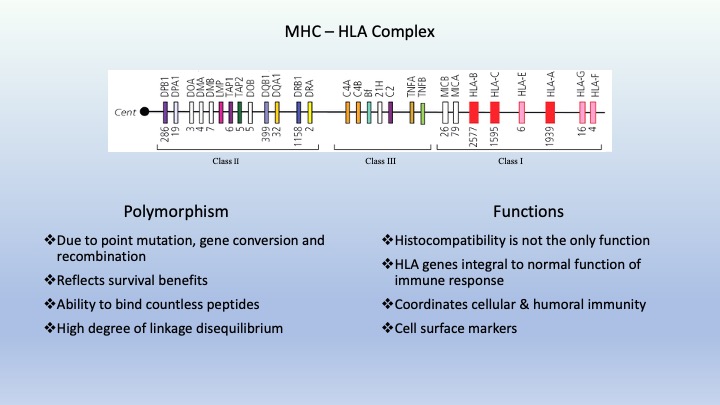 MHC-HLA genome-> divided into 3 regionsClass I: molecules present on nucleated cellsClass II: present on antigen presenting cellsClass III: are NOT histocompatibility genes
4/
HLA Class I Classical: HLA-A, -B, -C antigensNon-classical: HLA -E, -F, -G antigensClass I like antigens: MICA, MICB 5/
 HLA Class IIencodes HLA -DP, -DQ, -DR moleculesexpressed on antigen presenting cellspresents antigens to CD8 T cells
 6/
 HLA Class IIInot involved in histocompatibilityencodes complement proteins like C2, C4, cytokineshas both immune and non-immune genes
 7/
 HLA - StructureClass I has heavy glycoprotein alpha chain bound to beta 2 microglobulin (gene on chromosome 15). Alpha chain has three domains and is transmembraneClass II has both alpha & beta chainspeptide groove is highly polymorphic region
 8/
 HLA Class I Antigen Processing & PresentationAltered self or/viral protein --> degraded intracellularly into peptides by proteases --> which fit into peptide groove--> transferred to cell surface to present to CD8 T cells
 9/
 HLA Class II Antigen Processing & Presentation:Exogenous antigen---> endocytosis--> degraded into lysosomes--> combines with MHC compartment-->attached to peptide groove--> transferred to cell surface--> present to CD4 T cells
10/
 HLA typing:to assess the HLA genotypehistorically, it was done with serological microcytotoxicity using viable lymphocytes & panel of anti-seraNow, done with DNA-based HLA typing which is more reliable, precise & offers stable nomenclature
11/
 HLA nomenclatureserological typing defines " antigens"DNA typing defines "alleles"WHO nomenclature includes distinct fields seperated by colon ( : )for antigen, allele, specific protein, nucleotide substitution in coding & non-coding region
12/
 HLA Haplotype and Inheritance:HLA alleles from each parent is called haplotypeit is inherited in Mandelian fashionco-domminantly expressed
13/
 HLA antibodypreformed antibodies against HLA antigens are major transplant barriers and has significant impact on allograft survival
14/
Strategies to detect HLA AbsPRA: % panel reactive antibodies to assess sensitization in generalIdentification of specific antibodies in recipientcrossmatch when kidney is available15/
 Crossmatch -->three methodsstandard complement dependent cytotoxicity CDC (1960s)Flow T & B cells crossmatch (1980s)Solid phase technologies using single or multiple alleles-
16/
 Virtual Crossmatchpredicts presence of donor specific antibodies using solid phase without an actual crossmatchcompares recipient's HLA ab to donor HLA type to predict Xmatch resultsits use in lieu of 'wet' crossmatch is on the rise
17/
 Summarymethods for high resolution HLA typing & precise quantitation of HLA ab in transplant on the riseimpetus for virtual Xmatchneed for better understanding of immunogenicity of HLA molecules & the role of ab on graft survival.
 Thank you


