
 Read on Twitter
Ultimately what you're selling as a grifter is a self-image as an integrated, good person who has agency and exercises it wisely and morally.
The buyers are precisely people who both lack that self-image and not inclined to poke beneath surface appearances.
The buyers are precisely people who both lack that self-image and not inclined to poke beneath surface appearances.
Note: this is not exclusively restricted to sensory beauty. Certain kinds of abstract beauty work too. You can aestheticize a problem with beautiful spherical cow economics, and paper over the problem with lovely infographics and chartporn. That's aestheticizing a problem too.
Wonky investigation of the good sort is invariably very, very ugly. The data is a mess. The graphs are underwhelming, there is a messy mix of anecdote and tenuous trends. There is need for a good deal of repeated digging and refinement and ugly data dumpster diving.
Covid is a GREAT example of problem that presents opportunities for both kinds of grifting.
Sensory-aesthetic grifting: dumb-ass designs restaurants with beautiful perspex partitions, mask chic.
Abstract grifting: endless pretty chart porn of case counts.
Sensory-aesthetic grifting: dumb-ass designs restaurants with beautiful perspex partitions, mask chic.
Abstract grifting: endless pretty chart porn of case counts.
I'll end with a small mea culpa. Yeah, a lot of what I do is also a bit of a grift.
I aestheticize problems by finding pretty turns of phrase around which to build satisfying appreciative discourses. But in my defense, I'm ironic about it, and don't make much money off it.
I aestheticize problems by finding pretty turns of phrase around which to build satisfying appreciative discourses. But in my defense, I'm ironic about it, and don't make much money off it.
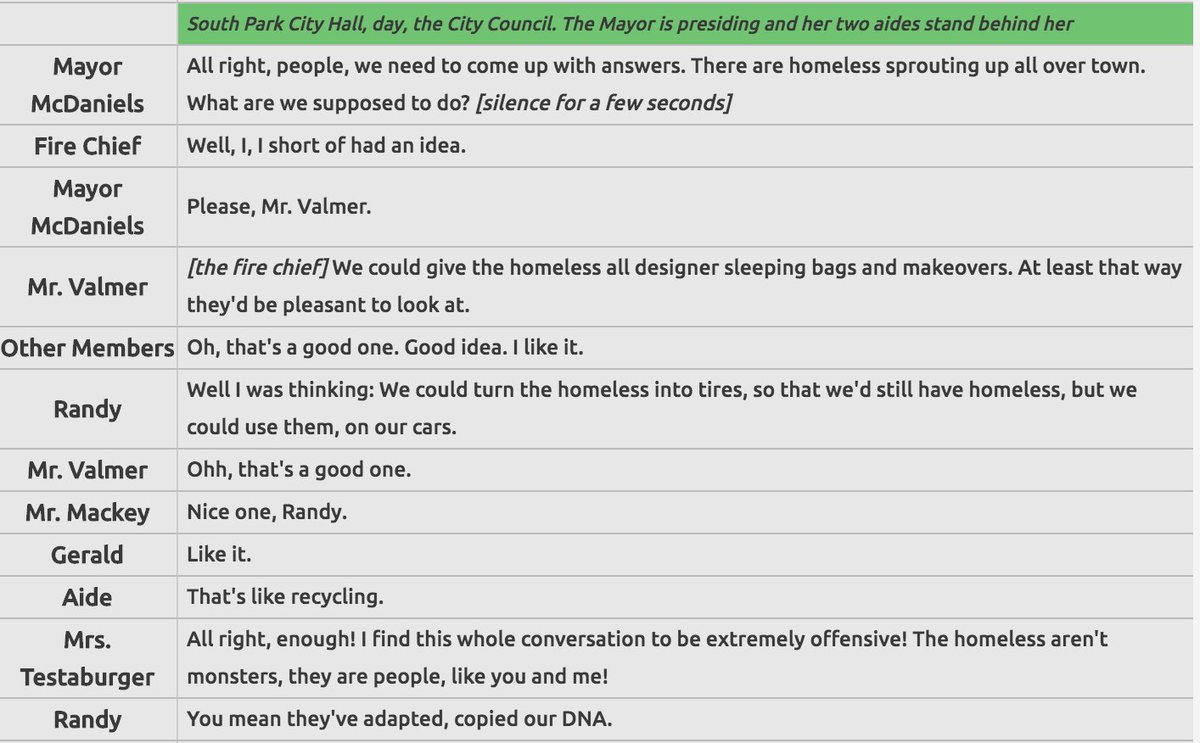
Bonus: South Park S11E7 Night of the Living Homeless has a great joke about problem aestheticization. Can't find a clip, but here's the script fragment.
"We could give the homeless all designer sleeping bags and makeovers. At least that way they'd be pleasant to look at."
"We could give the homeless all designer sleeping bags and makeovers. At least that way they'd be pleasant to look at."


